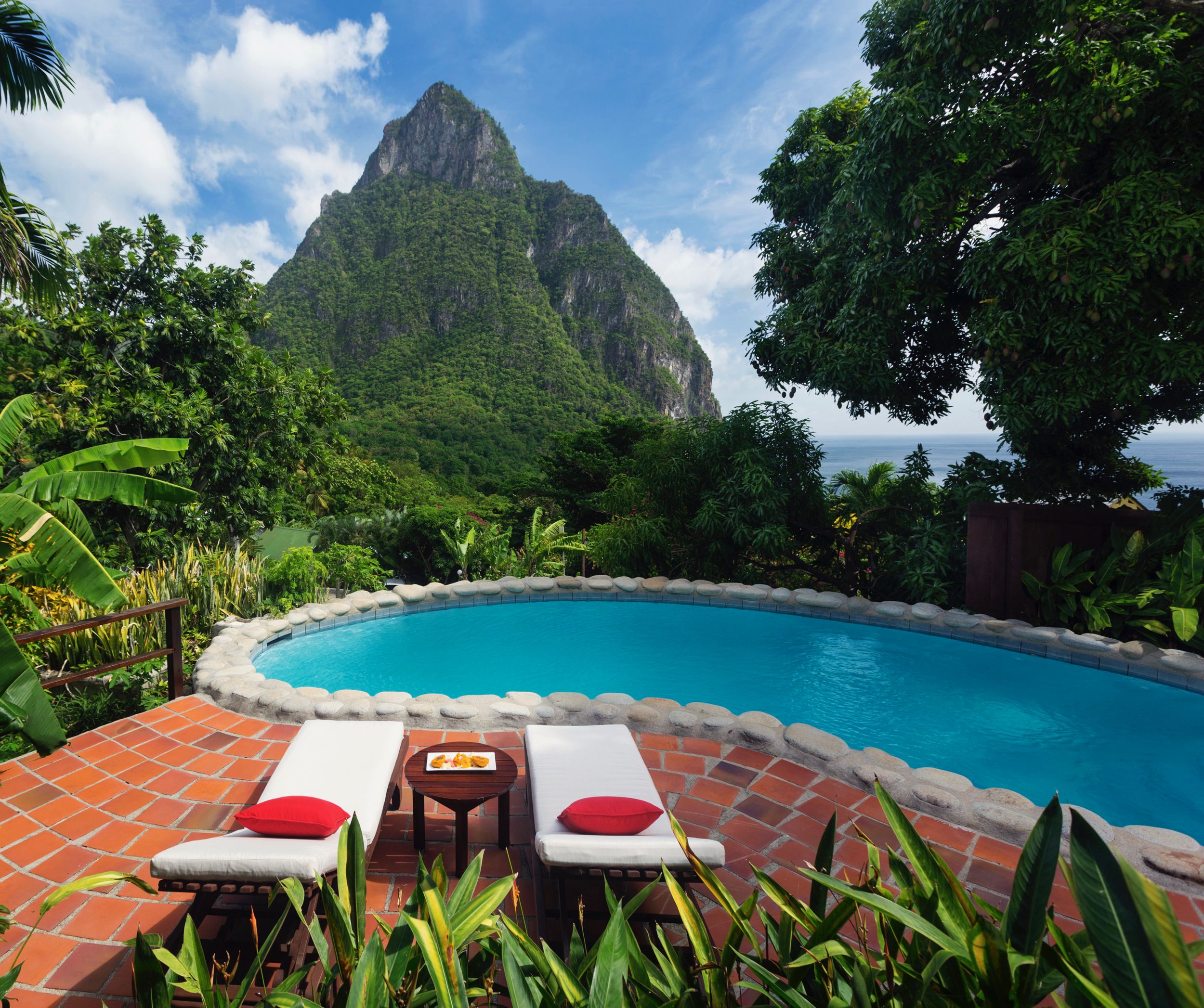
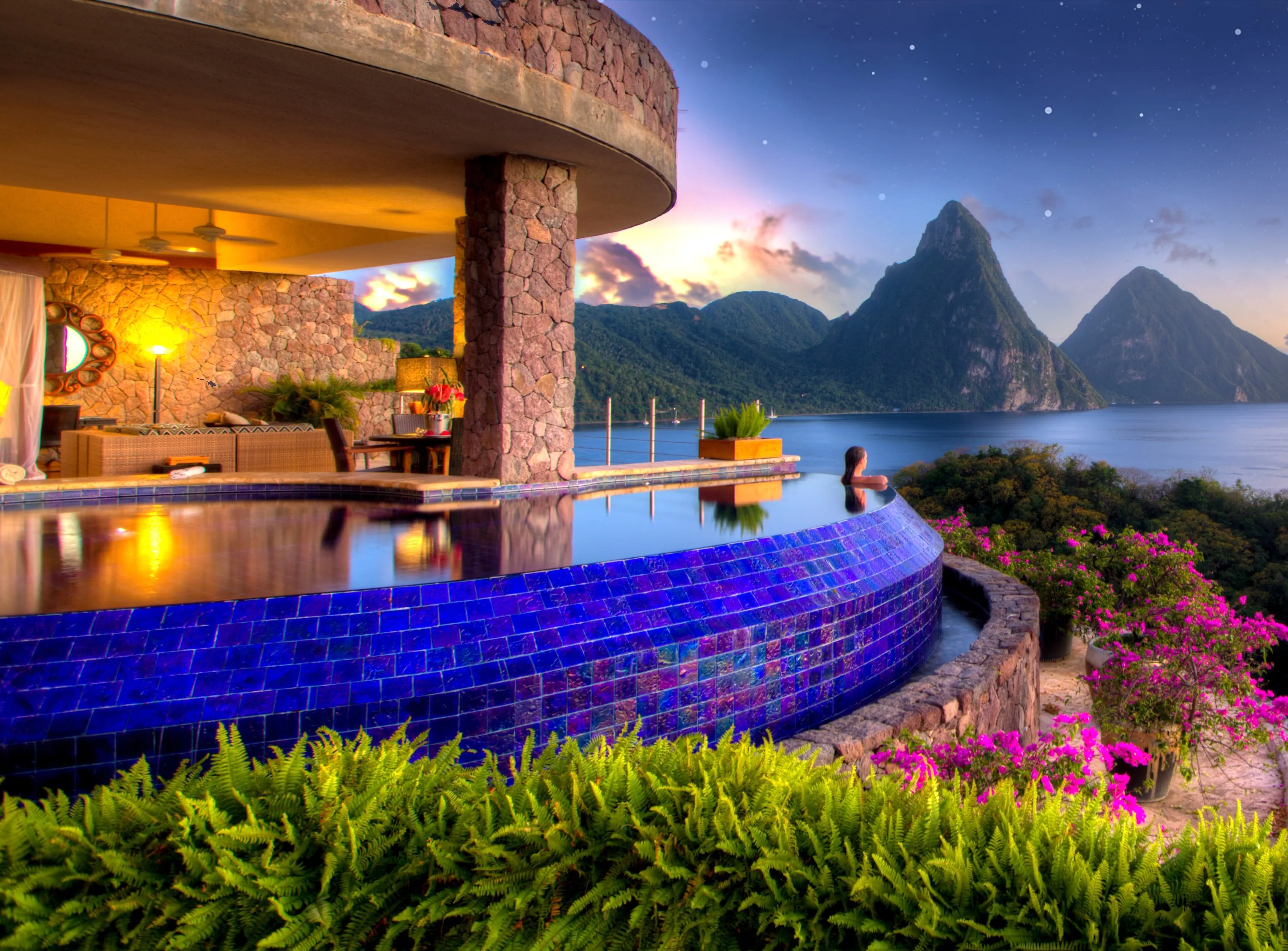
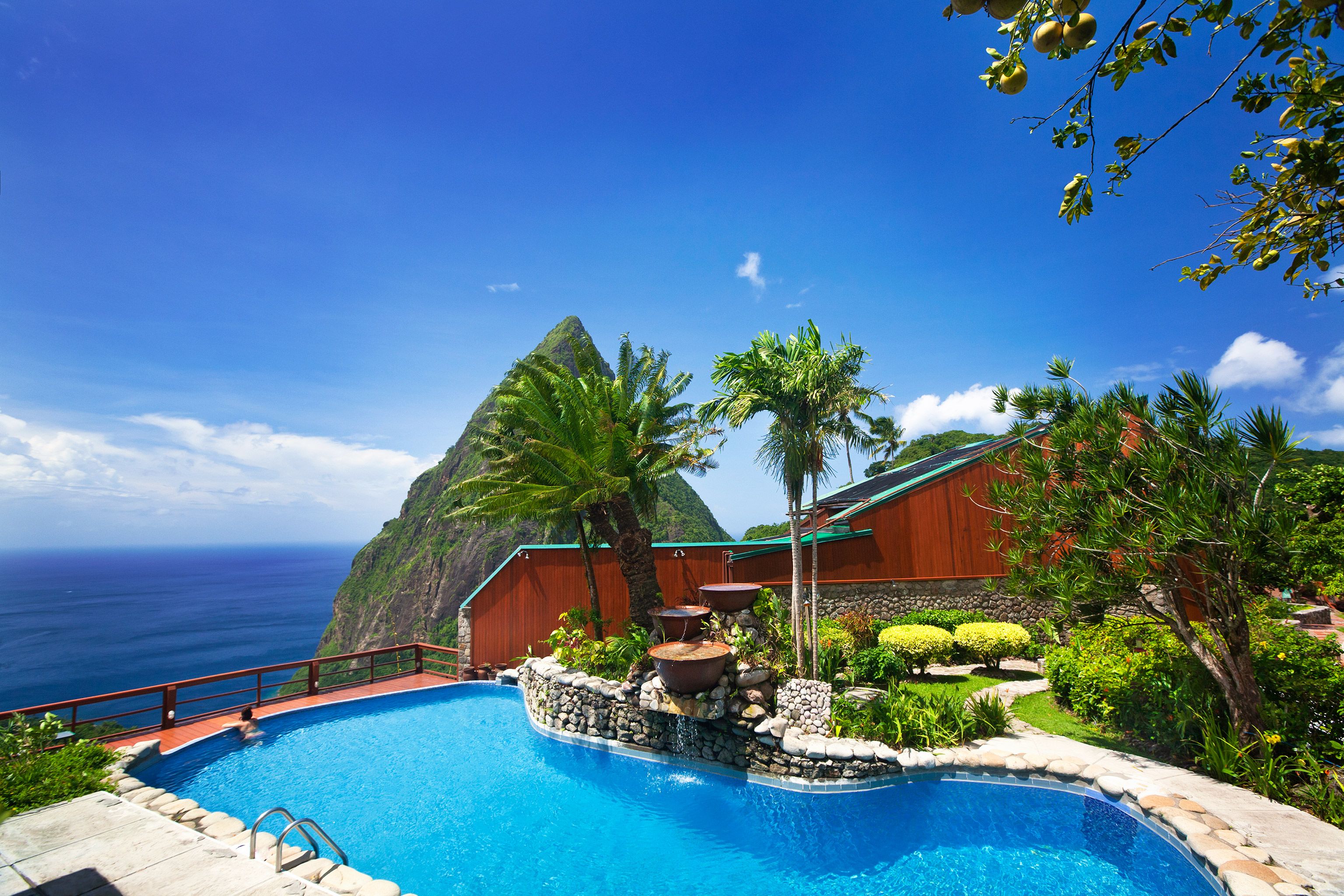
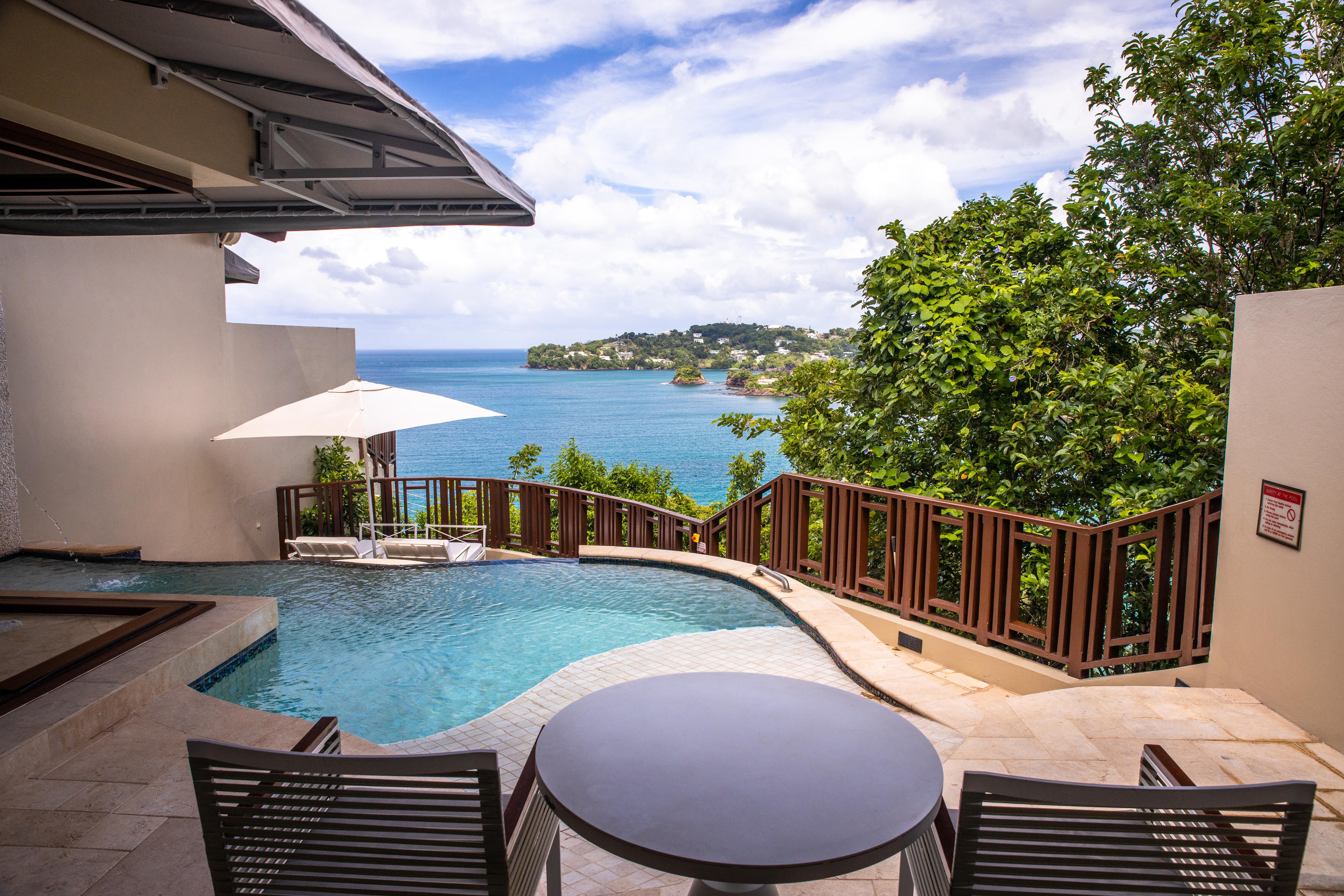
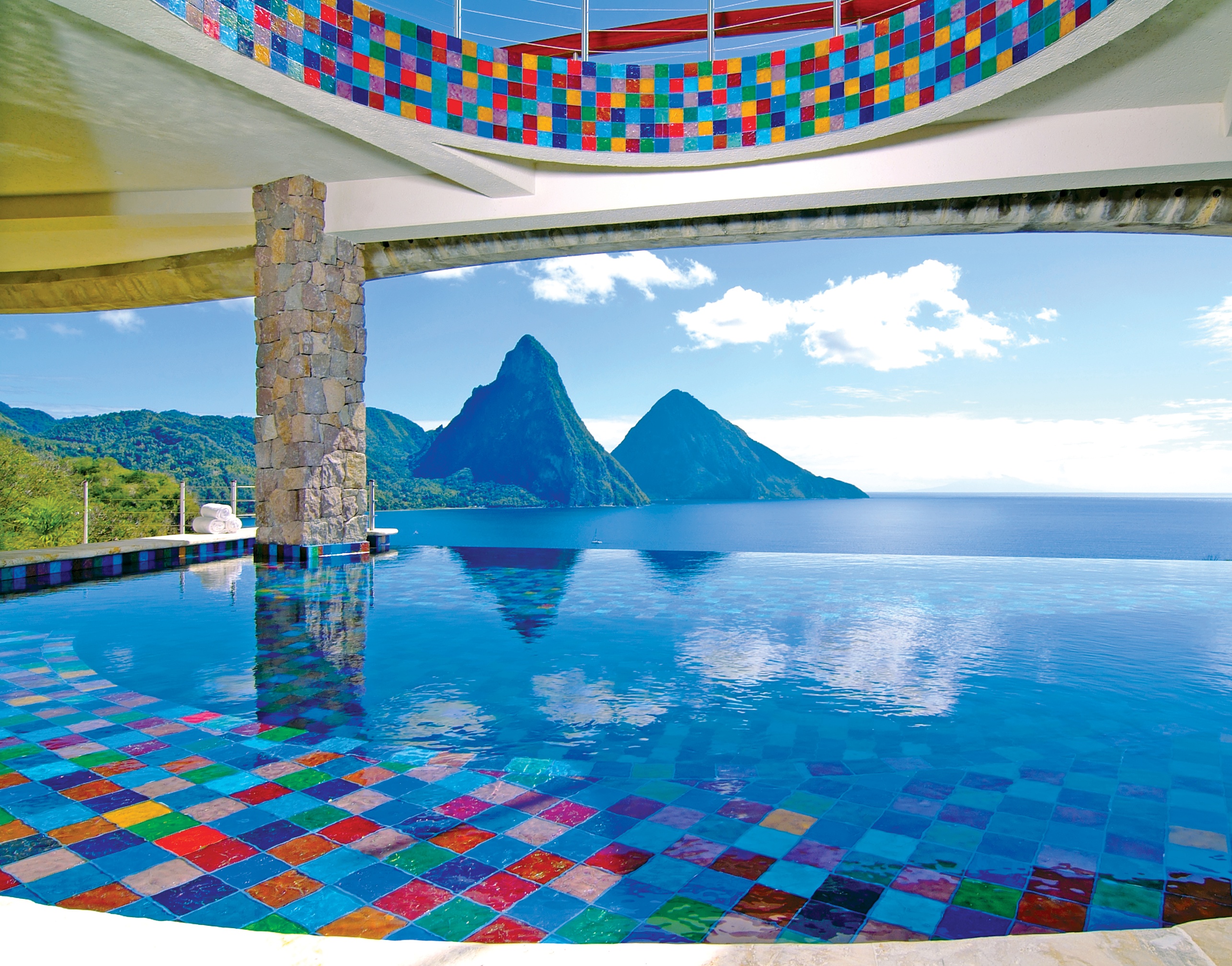
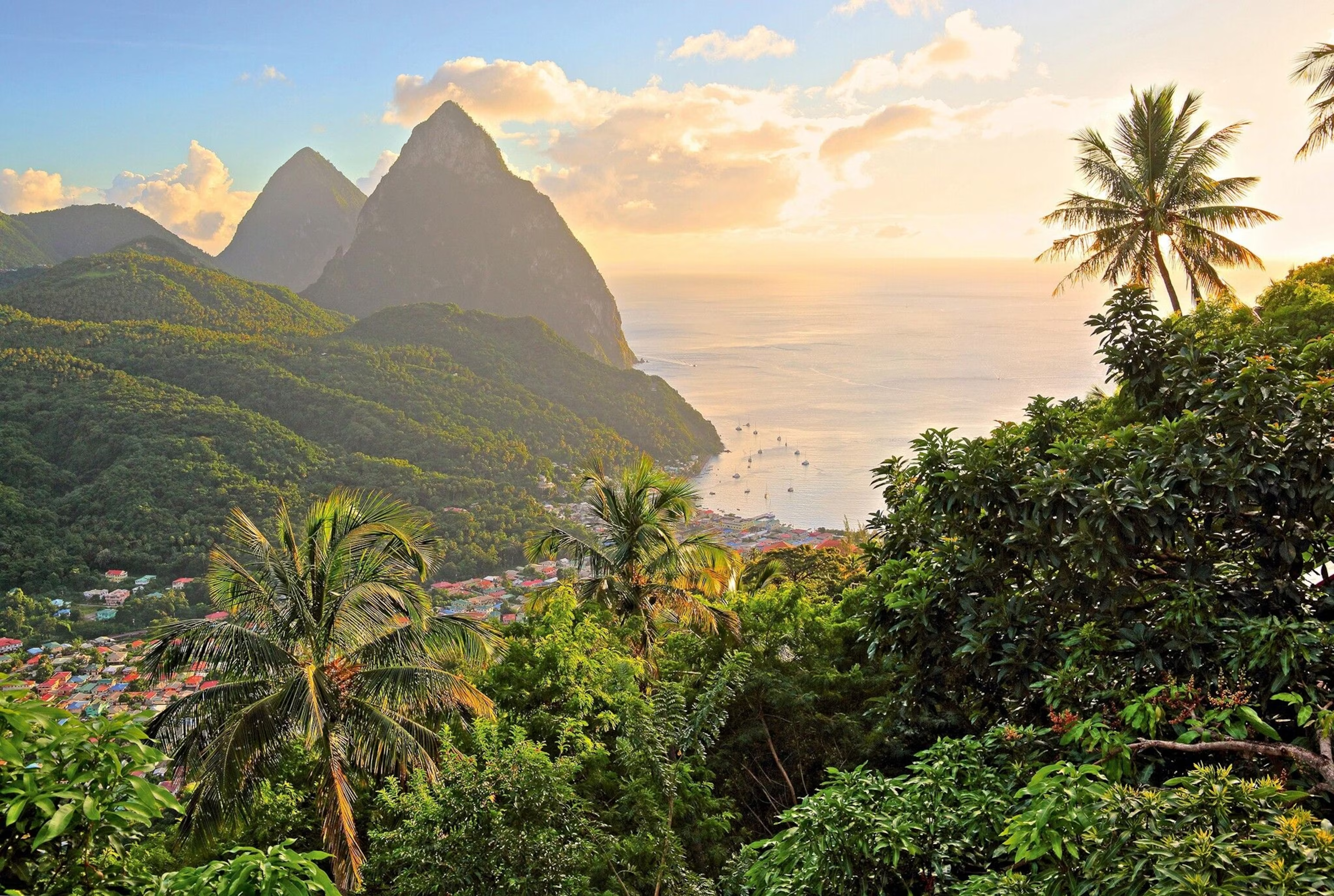
St. Lucia is an island built around a single image that earns its reputation every time. The twin volcanic peaks of the Pitons rise from the sea on the southwest coast with a verticality that is genuinely startling, and every property in their shadow is designed to maximize that view. From an infinity pool at Ladera Resort, with the open wall and jungle falling away below, you understand immediately why this island pulls couples back for anniversaries long after the honeymoon is over.
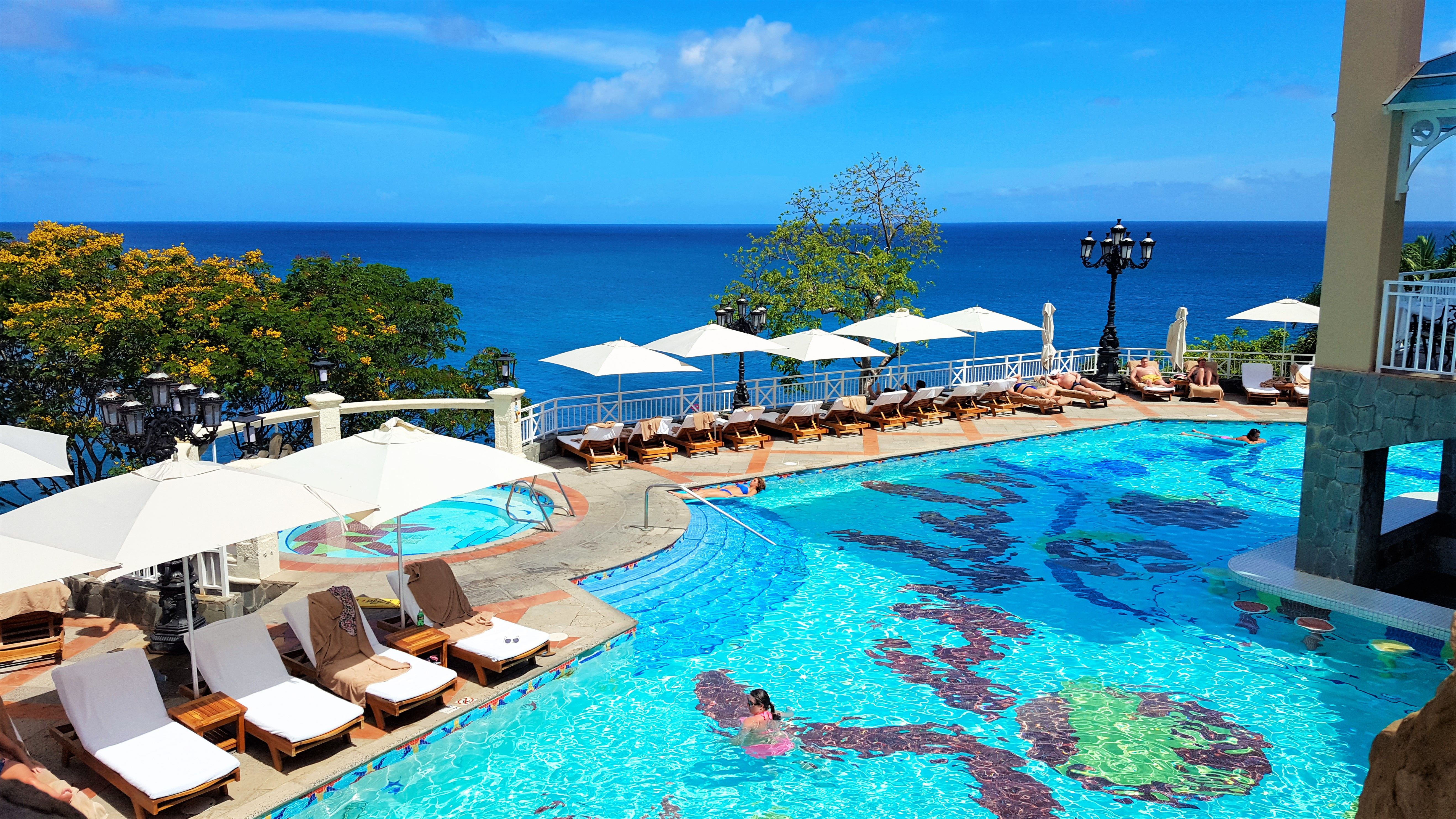
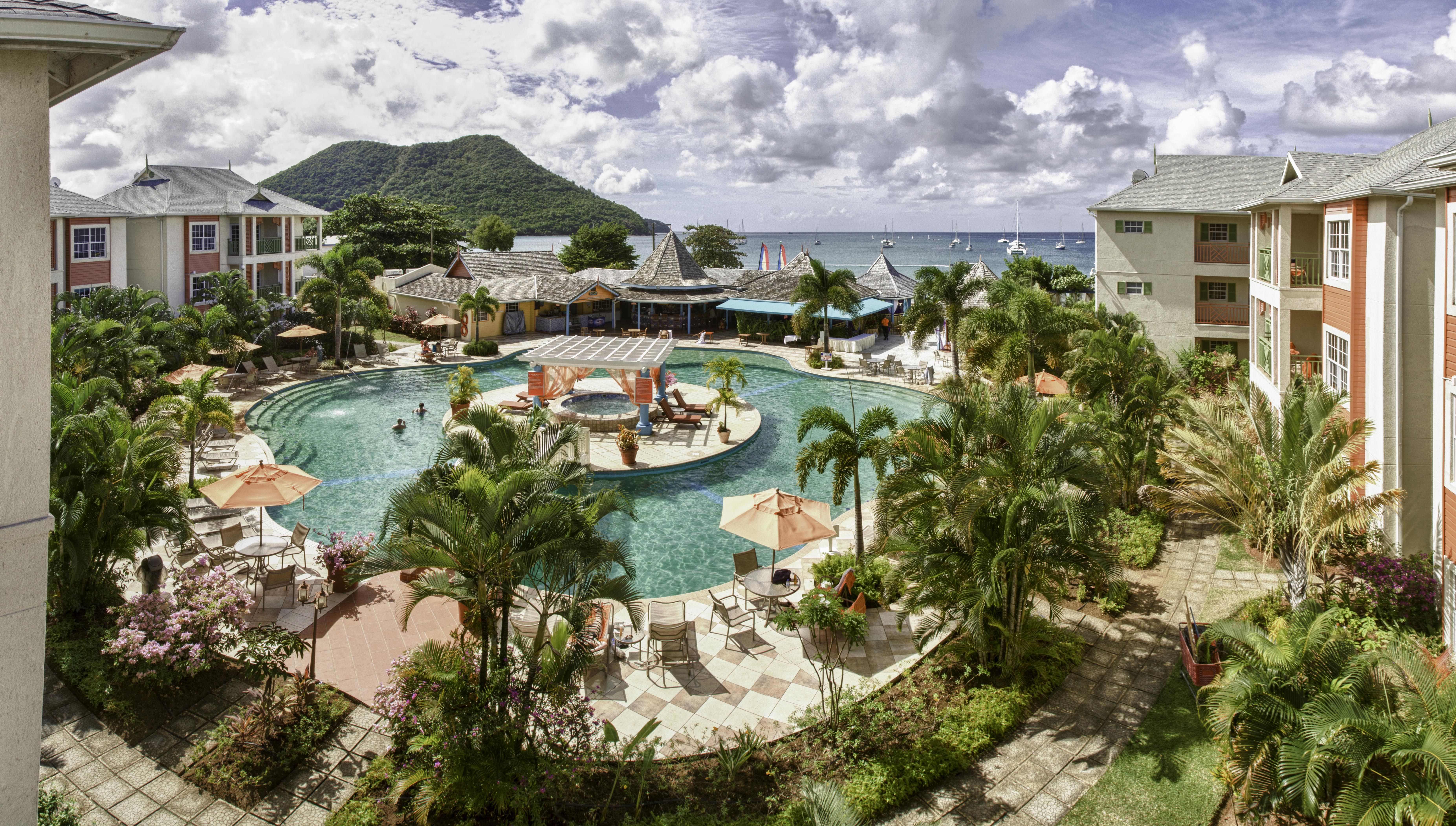
The island divides roughly into two temperaments. The north, around Rodney Bay and Gros Islet, has the best beaches, the liveliest Friday night street fish fry, and a range of resort options from luxury to boutique. Sandals Grande and Sandals La Toc sit here, with the wedding and honeymoon infrastructure that the brand has spent decades refining. The water is calmer, the strip is accessible, and the energy is sociable without being overwhelming.
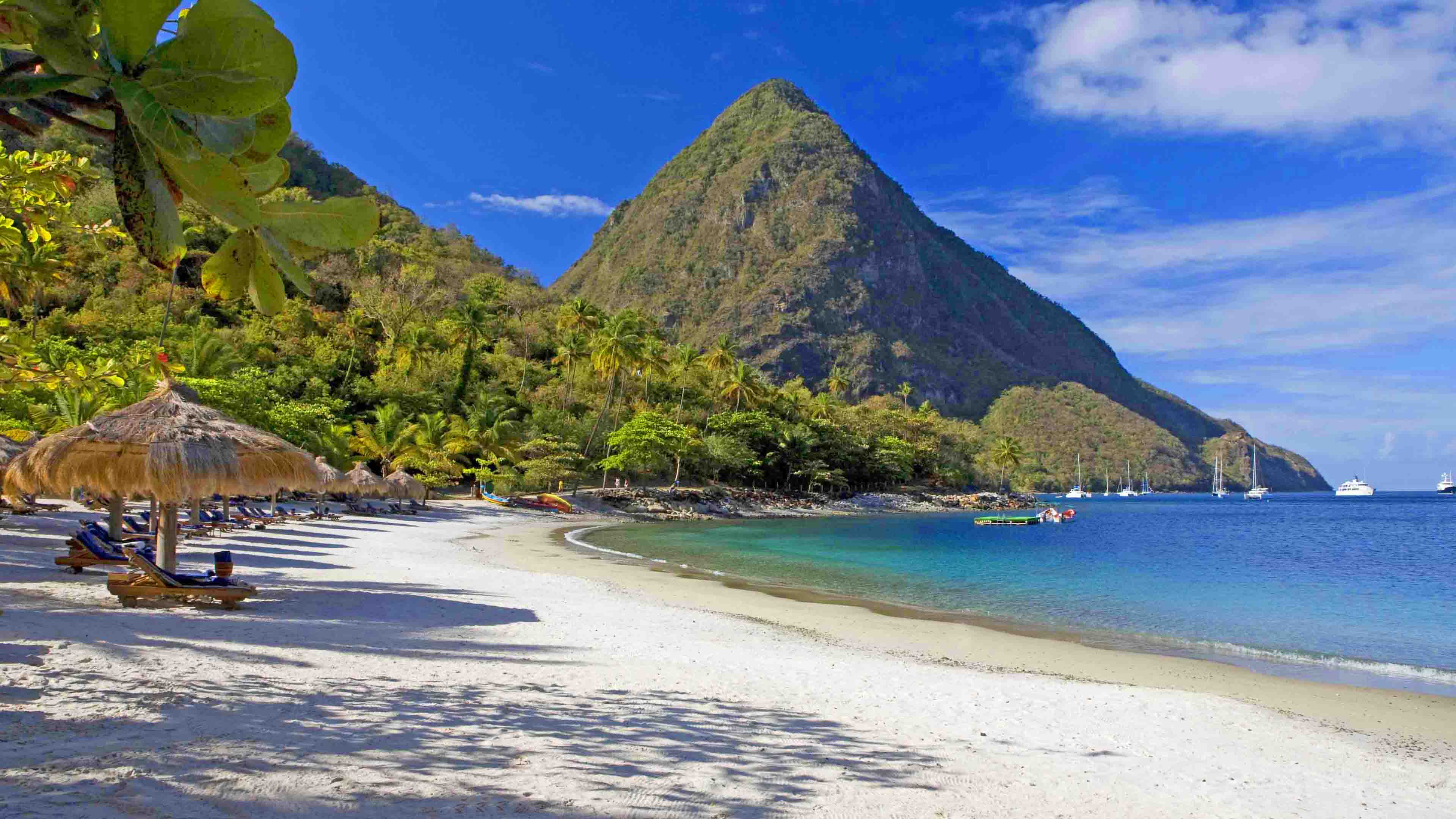
The south is different in character: lush, rainforest-heavy, and framed by the Pitons. Soufrière is a working town that smells of sulphur from the drive-in volcano above it, and the hot springs and mud baths nearby are not a resort gimmick but a geological reality. Ladera Resort here has no fourth wall on its rooms — the open side faces directly into the Piton vista. Sugar Beach, set between the two peaks at the site of an old sugar estate, is one of the most dramatically positioned properties in the Caribbean.
Jade Mountain is St. Lucia's most singular property. The architect built each room as an open sanctuary with a private infinity pool that cantilevers toward the Pitons. There are no televisions. The design intent is that nothing in the room should compete with what is outside of it. It is the kind of place people describe not in terms of amenities but in terms of how it made them feel.
St. Lucia is a destination for people who want their honeymoon or anniversary to feel earned. The island requires a connecting flight from most US cities, and the most interesting properties sit on roads that test rental cars. All of that filters the experience toward travelers who chose it deliberately, and that deliberateness is returned to you in the quality of what you find there.
Castries Central Market sells spices, hot sauce, local cocoa sticks, and handwoven baskets at prices far better than the hotel shops. The artisan village near the Craft Market carries pottery, wood carvings, and island-made jewelry. Choiseul in the south is known for traditional crafts and woven goods made by local cooperatives.
Creole cooking defines St. Lucian cuisine: plantain, breadfruit, salt fish, callaloo soup, and green fig with saltfish — the national dish, eaten at any hour. The Friday night fish fry at Anse La Raye brings the whole community out, and the tables set up along the waterfront are as good as any restaurant on the island. Grilled fish pulled from the Caribbean that morning needs nothing added to it.
Chairman's Reserve rum, produced at the St. Lucia Distillers on the island, is one of the Caribbean's best and rarely found beyond the region. Piton beer is the local lager, drunk cold from the bottle at any beach bar. Fresh coconut water and homemade passion fruit juice are available from roadside vendors throughout the island.
Hewanorra International Airport (UVF) in the south handles most international arrivals, with service from the US, UK, and Canada. George F. L. Charles Airport (SLU) in the north serves regional Caribbean routes. Most US travelers connect through Miami, New York, or Charlotte. Transfer time from Hewanorra to Rodney Bay is about 90 minutes by road.
There is no rideshare app operating on the island. Licensed taxis are available at both airports and at hotels. Minibus routes connect the main towns but are better navigated with local guidance. Water taxis between Soufrière and Castries are fast, scenic, and the most practical option for north-south travel.
Most luxury properties arrange airport transfers as part of arrival. Properties in the south often offer helicopter transfer options from Hewanorra, which turns a 90-minute road journey into a 10-minute flight over the island. We include transfer coordination in every St. Lucia itinerary we build.
Atlantic Standard Time (AST, UTC-4) year-round. St. Lucia does not observe daylight saving time. During US Eastern Daylight Time (summer), St. Lucia is the same hour as New York. In winter, it is one hour ahead.
No rideshare apps operate on the island. Licensed taxis are identified by blue plates with TX designation. Fares should be agreed before departure. Your hotel can arrange trusted drivers for excursions, which is the most reliable option.
230V, 50Hz. Type G plugs (three-pin rectangular, same as the UK). North American visitors will need a plug adapter and possibly a voltage converter for older electronics. Most luxury hotels include universal outlets at the bedside.
Tropical with consistent trade winds. Temperatures stay between 75°F and 90°F year-round. The dry season runs January through April — peak season with the clearest skies. The wetter months from June through November are lush and green, with most rainfall coming in afternoon showers rather than all-day rain.
St. Lucia was the location for portions of the original Dr. Doolittle film and has appeared in several travel documentaries featuring the Pitons. The island produced Nobel laureate Derek Walcott, the poet and playwright who won the Nobel Prize in Literature in 1992. Nobel economist Sir W. Arthur Lewis was also St. Lucian. The island holds two Nobel laureates per capita — the highest ratio of any country in the world.
Emergency: 911
Police: 999
Medical Emergency: 911
Fire: 911
Country Code: +1-758