MOROCCO

Morocco is organized around contrast. The medina of Marrakech presses against you with heat, color, and sound in the middle of the day, and by evening the same streets are lit gold and quiet in a way that feels entirely different. The country moves between registers constantly — desert and mountain, ancient and contemporary, overwhelming and still — and the travelers who respond to it tend to feel it personally rather than simply checking it off.

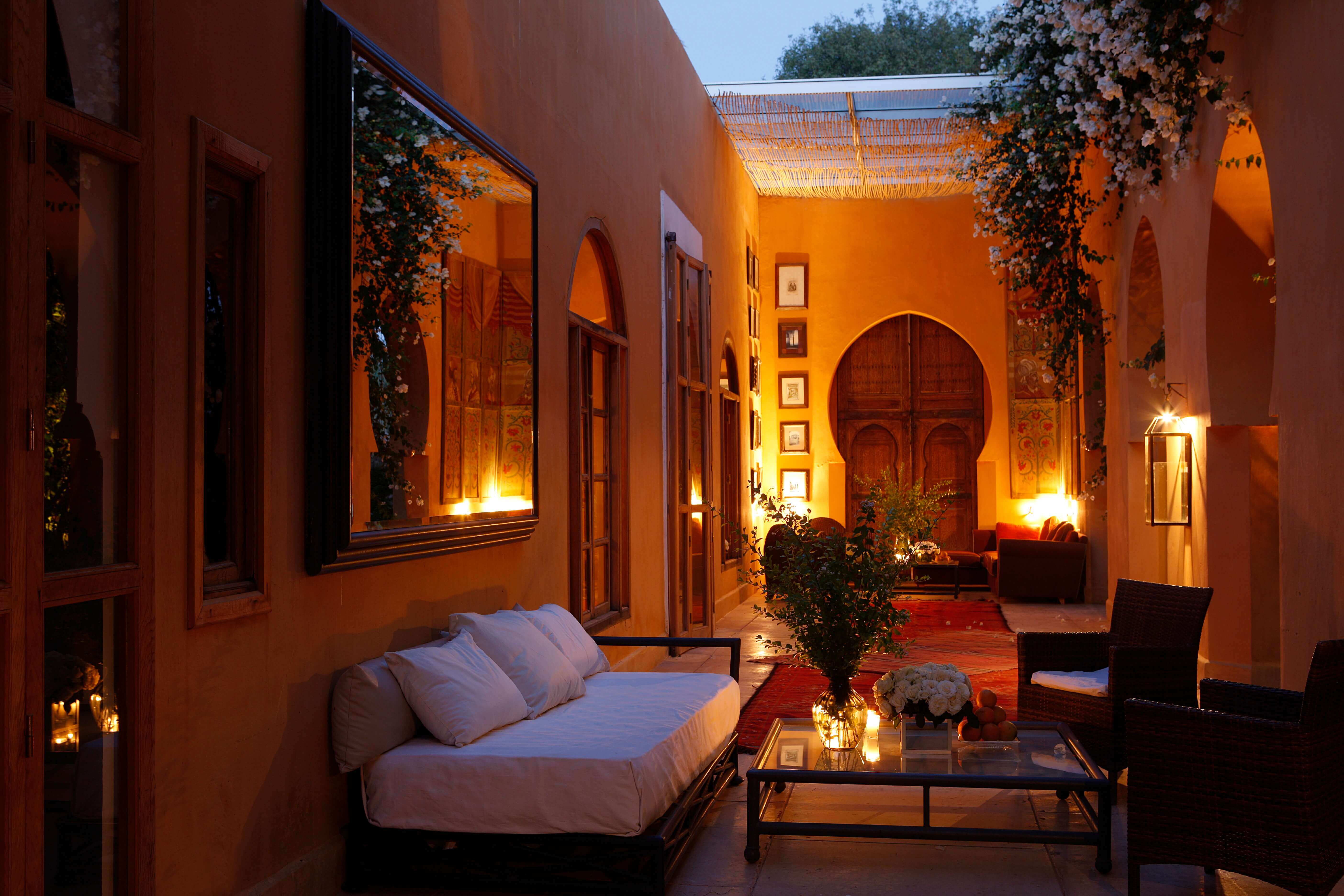
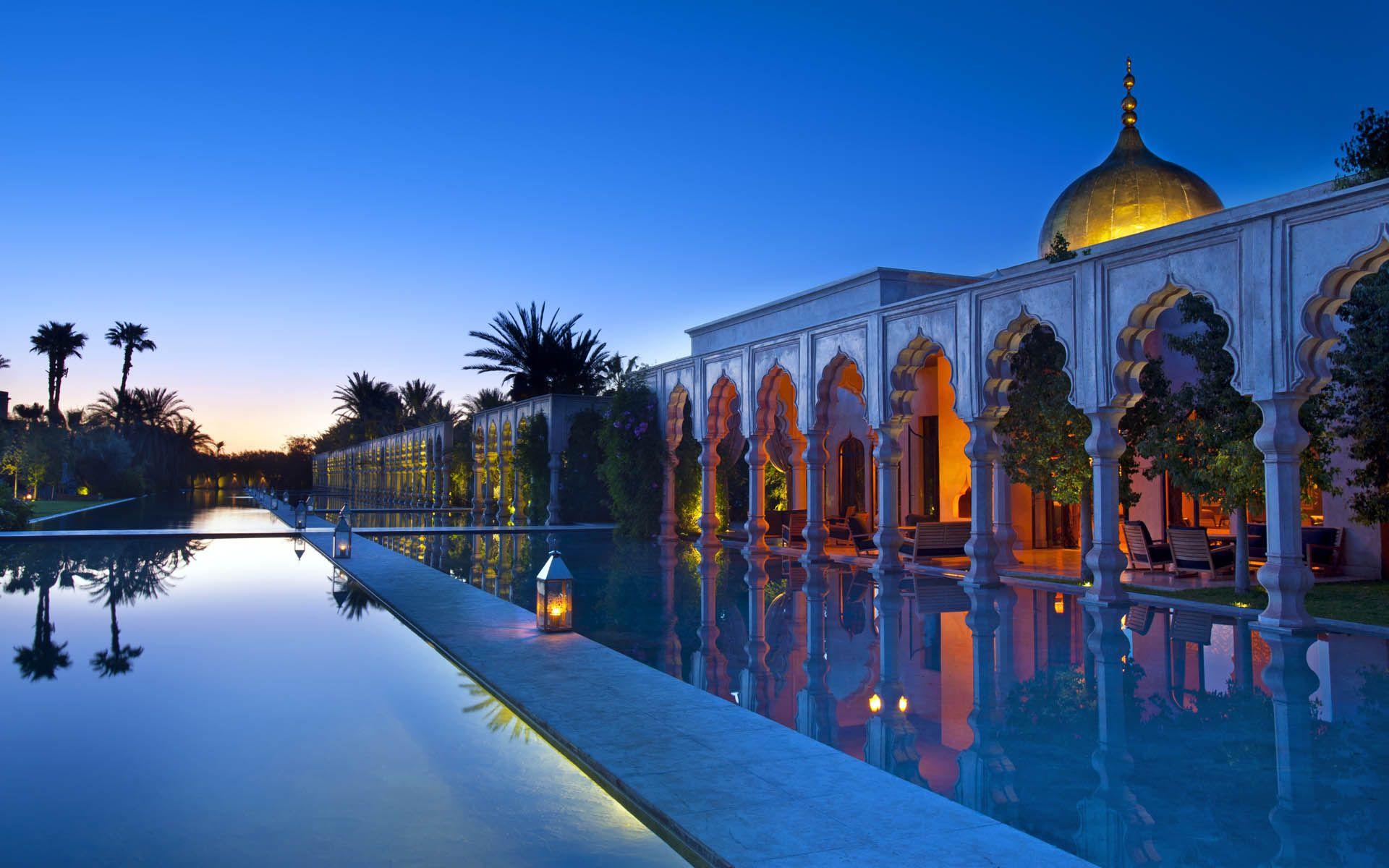
Marrakech is the center of it. The Djemaa el-Fna, the main square, fills differently at different hours: orange juice vendors and snake charmers in the afternoon, food stalls and musicians after sunset. The souks surrounding it are organized by trade in a system that dates back centuries — spice merchants, leather tanners, weavers, and metalworkers each in their own quarter. The riads set behind the medina walls are the accommodation form Morocco invented: courtyard houses turned inward, tiled and planted, where the noise of the street disappears behind a wooden door. The best of them — La Mamounia, El Fenn, Dar Ahlam — are extraordinary properties that use the form to its absolute limit.

Fès is the older city, and many argue the more significant one. The medina of Fès el-Bali is the largest car-free urban area in the world. The tanneries visible from the leather shops above them have operated continuously for a thousand years. The Bou Inania Madrasa, the Nejjarine Museum, and the al-Qarawiyyin library — founded in 859, considered the world's oldest continuously operating university — are in walking distance of each other. Fès rewards the traveler who slows down and allows the place to reveal itself over several days.

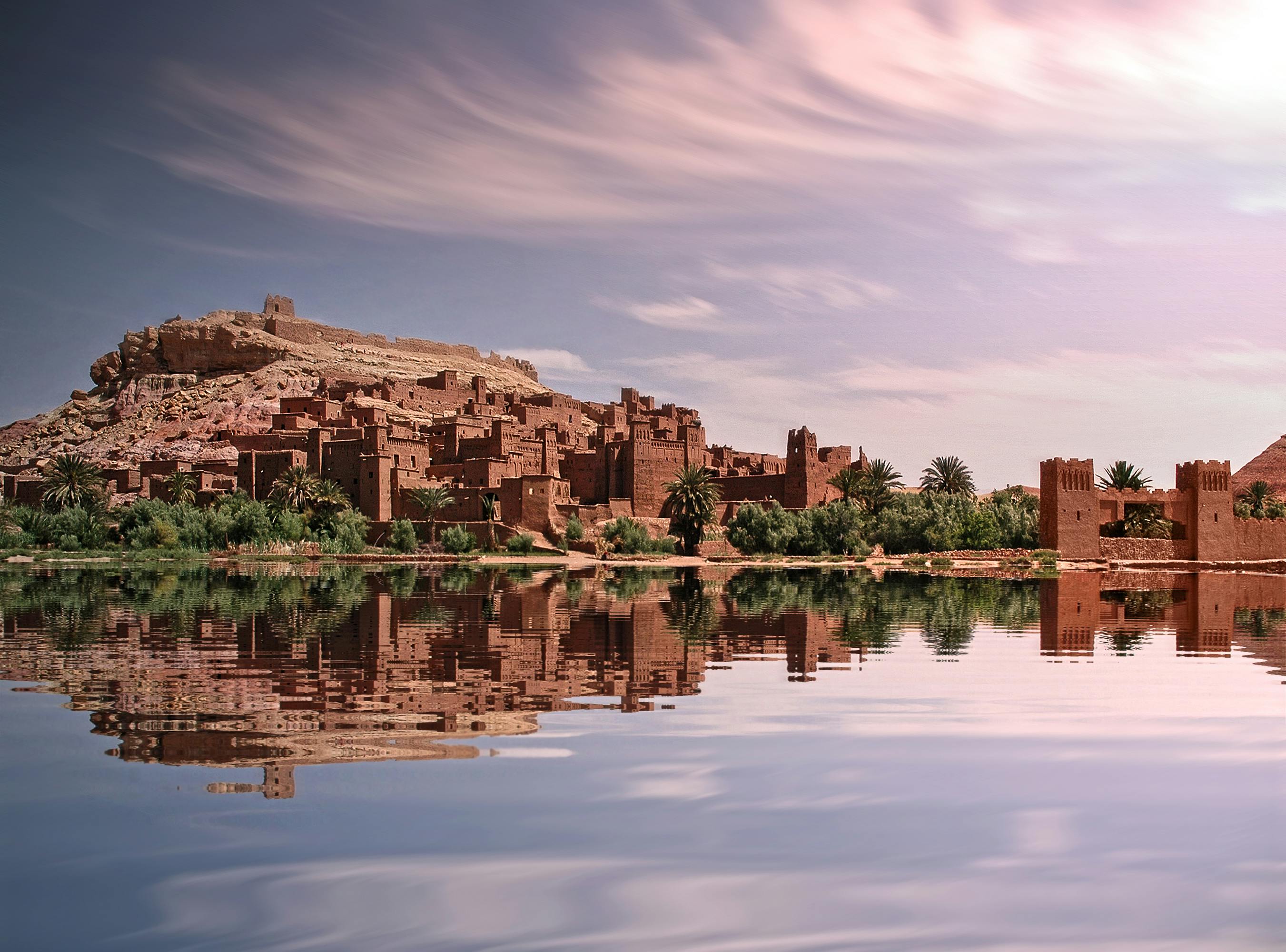
The route south from Marrakech through the High Atlas and into the Draa Valley is one of the finest drives in Africa. Aït Benhaddou, the ksar rising from the desert that has appeared in more films than most sets, sits along the way. Beyond it, the pre-Saharan landscapes of Zagora and Merzouga open into dunes that run south until they reach Algeria. Camel treks, desert camp nights, and the particular silence of the Sahara at dawn are experiences that rearrange the way you think about space and quiet.

Tangier, facing Europe across the strait, carries a cosmopolitan history unlike anywhere else in Morocco. The writers and painters who came here through the mid-twentieth century left a cultural residue that remains visible. The food is different from the south — more Spanish and Mediterranean in its influences — and the Kasbah above the port offers one of the continent's great views across open water. It is the right place to end a Moroccan journey, looking back at what you have just moved through.

Need To Know

Royal Air Maroc and budget carriers connect Marrakech, Casablanca, Fès, Tangier, and Agadir domestically. The train network (ONCF) is reliable and comfortable between Casablanca, Rabat, Fès, and Tangier. The journey south toward the Sahara is best done by private vehicle with a driver, which gives you full flexibility for stops along the route.
In Marrakech and Fès, walking is the only way to navigate the medinas — the streets are too narrow for vehicles. Petit taxis operate in all major cities and are metered. Careem (the regional equivalent of Uber) operates in Morocco's larger cities. In the medina, a local guide makes a genuine difference in navigating the layout and understanding what you are seeing.
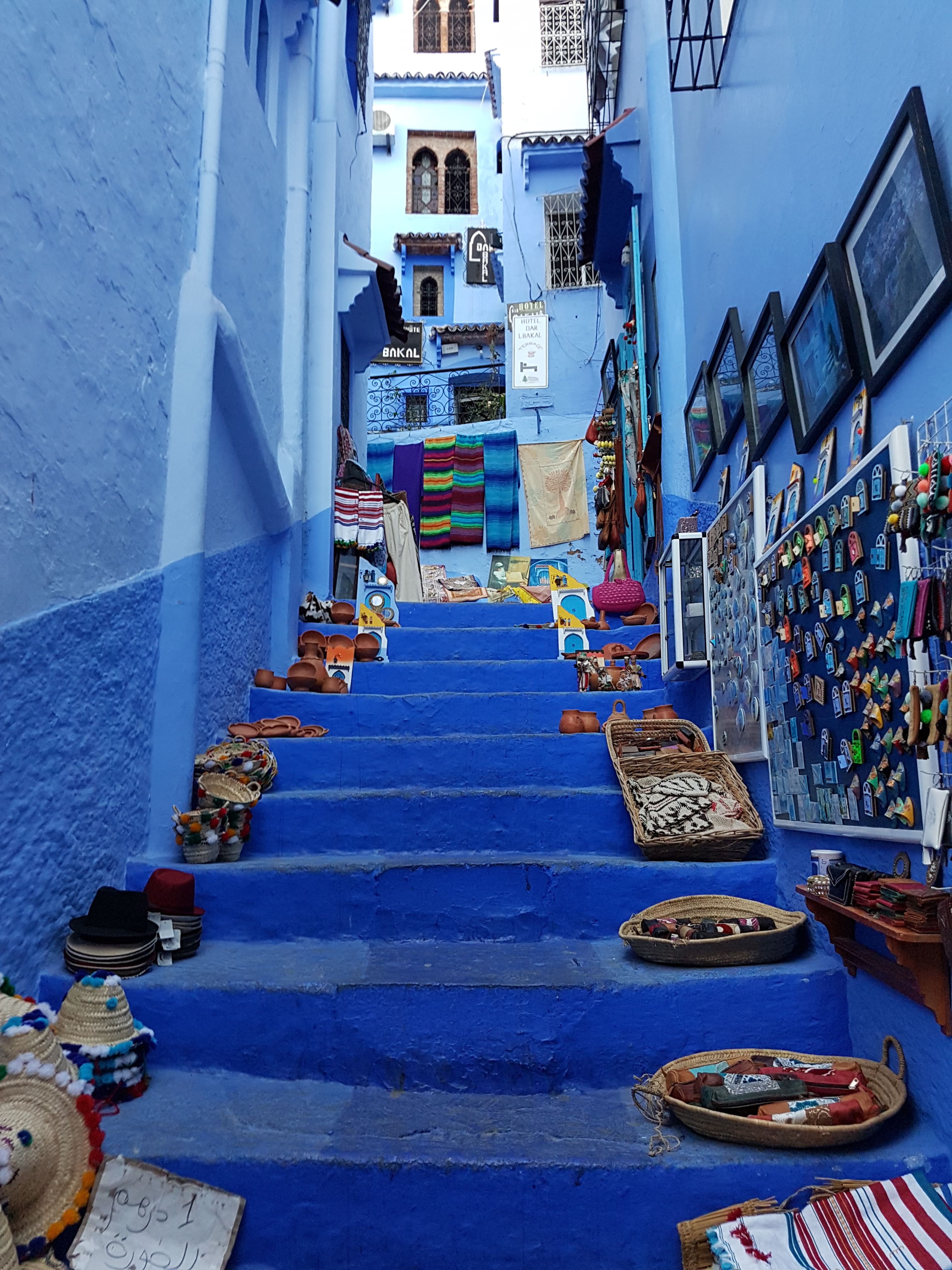
Chefchaouen in the Rif Mountains is a hilltop city painted entirely in blue — every alley, every wall, every staircase. The Dades Gorge and the Valley of Roses bloom in April with damask roses used in the country's perfume industry. Essaouira on the Atlantic coast is a walled port city with a thriving artisan community, a distinct Gnawa music tradition, and winds that make it one of the world's great kite-surfing destinations.

Shop, Eat & Drink

Shop

Morocco's craft tradition is extraordinary in its range and depth. Hand-knotted Berber rugs, zellige tilework, hammered copper lanterns, argan oil products, leather goods from the Fès tanneries, and hand-embroidered textiles are all worth seeking out from the artisans who make them rather than the tourist shops that resell them. The fixed-price cooperatives in Marrakech and Fès are reliable starting points.

Eat

Tagine, cooked slowly with preserved lemon and olives, is the essential Moroccan dish. Pastilla — a flaky pastry filled with pigeon or chicken, almonds, and spices — is one of the most complex single dishes in North African cooking. Harira soup, mechoui whole-roasted lamb, and the bread served at every meal are the constants. Eating in a riad courtyard or at a rooftop table above the medina is an experience the food is worth organizing around.

Drink

Morocco is a Muslim country where alcohol is available in licensed restaurants and upscale hotels but absent from the medina and most local establishments. Mint tea poured from height — the theatrical pour is intentional, aerating the tea as it falls — is the national gesture of hospitality and is offered constantly. Fresh-squeezed orange juice from the Djemaa el-Fna carts in Marrakech is the best version of that drink you will encounter anywhere.

Transport & Travel

Arriving

Mohammed V International Airport in Casablanca (CMN) is the main international hub with connections from most major European cities and several North American gateways. Marrakech Menara Airport (RAK) receives direct flights from Europe and is the better arrival point for itineraries focused on the south. New York and other US cities typically connect through Madrid, Paris, or London.

Within Morocco

The ONCF train network connects Casablanca, Rabat, Fès, Meknès, and Tangier efficiently. For destinations not on the rail network — Marrakech to the Sahara, the Atlantic coast, or the Rif Mountains — private vehicle hire with a driver is the most comfortable option and provides flexibility for stops. Careem operates in major cities.

In the Medinas

The historic medinas of Marrakech and Fès are pedestrian-only zones. Donkeys and motorbikes navigate the wider lanes; everything else is on foot. A riad within the medina means you are already inside where you want to be. Local guides are worth hiring — the medina of Fès in particular has several thousand lanes and is genuinely disorienting without someone who knows it.

Practical Information

Time Zone

Western European Time (WET, UTC+0) in winter. Morocco observes daylight saving time from late March to late October (WEST, UTC+1), though it suspends DST during Ramadan. Confirm current offset when planning your trip.

Ride Share & Taxis

Careem operates in Casablanca, Rabat, Marrakech, and Fès. Petit taxis (small metered cabs) cover city travel. Grand taxis are shared long-distance vehicles that depart when full. In the medinas, walking is the only option — no vehicles enter the historic centers.

Electricity & Plugs

220V, 50Hz. Type C and E plugs (two-pin round, standard European). North American visitors need a plug adapter. Most upscale riads and hotels include universal outlets. A voltage converter is not necessary for modern electronics.

Climate

Mediterranean along the coast, semi-arid in Marrakech, and extreme in the Sahara. Spring (March to May) and autumn (September to November) offer the most comfortable temperatures for travel across regions. Marrakech summers exceed 100°F; the Sahara can reach 120°F. Coastal cities like Tangier and Essaouira remain moderate year-round.

Film / TV & Famous People

Morocco has served as a location for Lawrence of Arabia, Gladiator, Game of Thrones, Babel, and The Mummy. The country's landscapes double convincingly for the Middle East and ancient Rome. Morocco produced novelist Tahar Ben Jelloun, philosopher Ibn Rushd (Averroes), and explorer Ibn Battuta, whose 14th-century travels covered more distance than any explorer before or after him. The Gnawa musicians of Essaouira have influenced jazz, blues, and world music globally.

Important Phone Numbers

Emergency: 190
Police: 190
Medical Emergency: 150
Fire: 150
Country Code: +212

Popular Destinations

Marrakech Morocco
Marrakech
The Red City centers on the Djemaa el-Fna and its surrounding souks — a medina of spice merchants, leather tanners, and riads that turn inward to reveal extraordinary interiors.
Marrakech Palmery riad
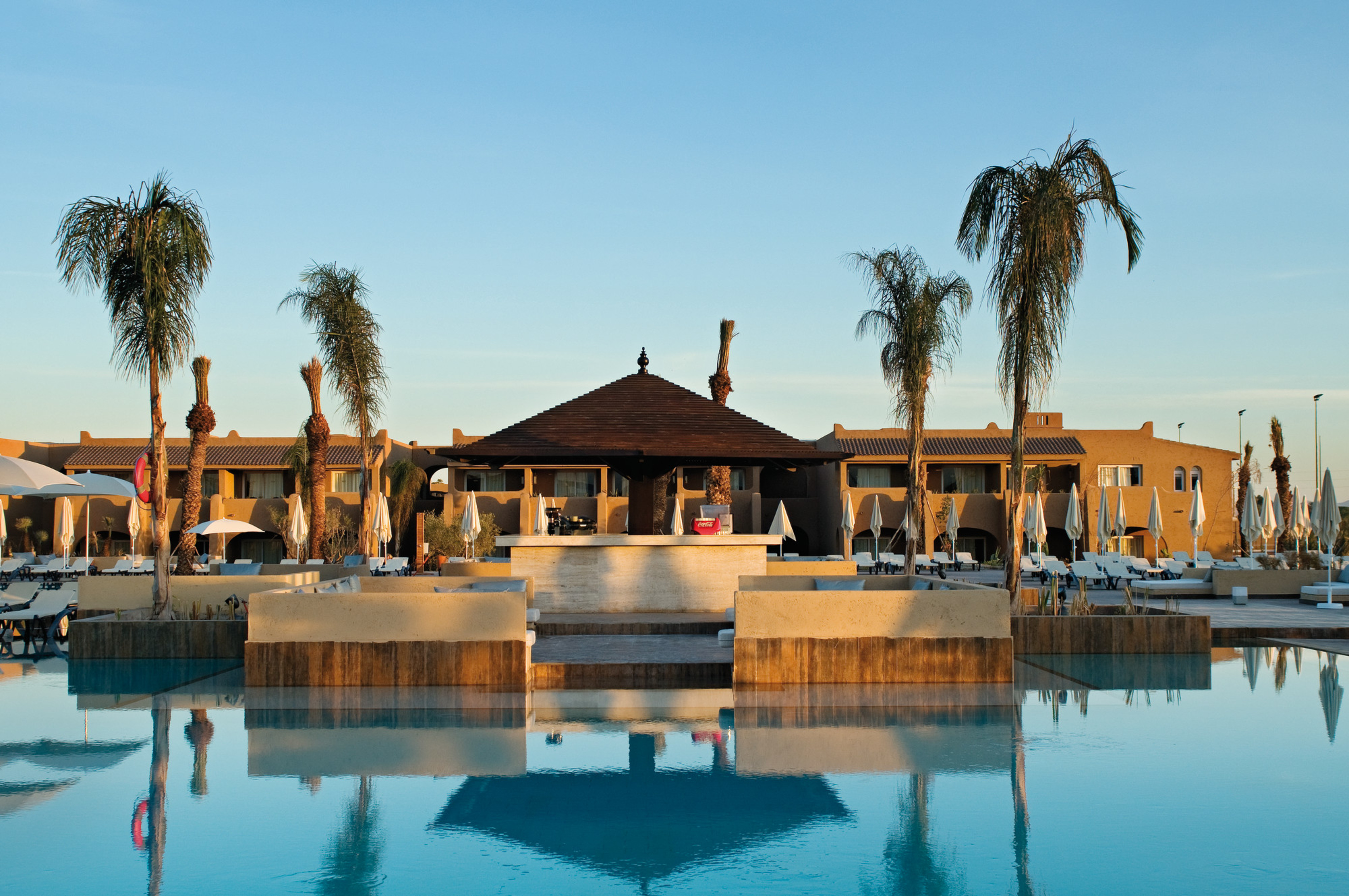
La Palmeraie
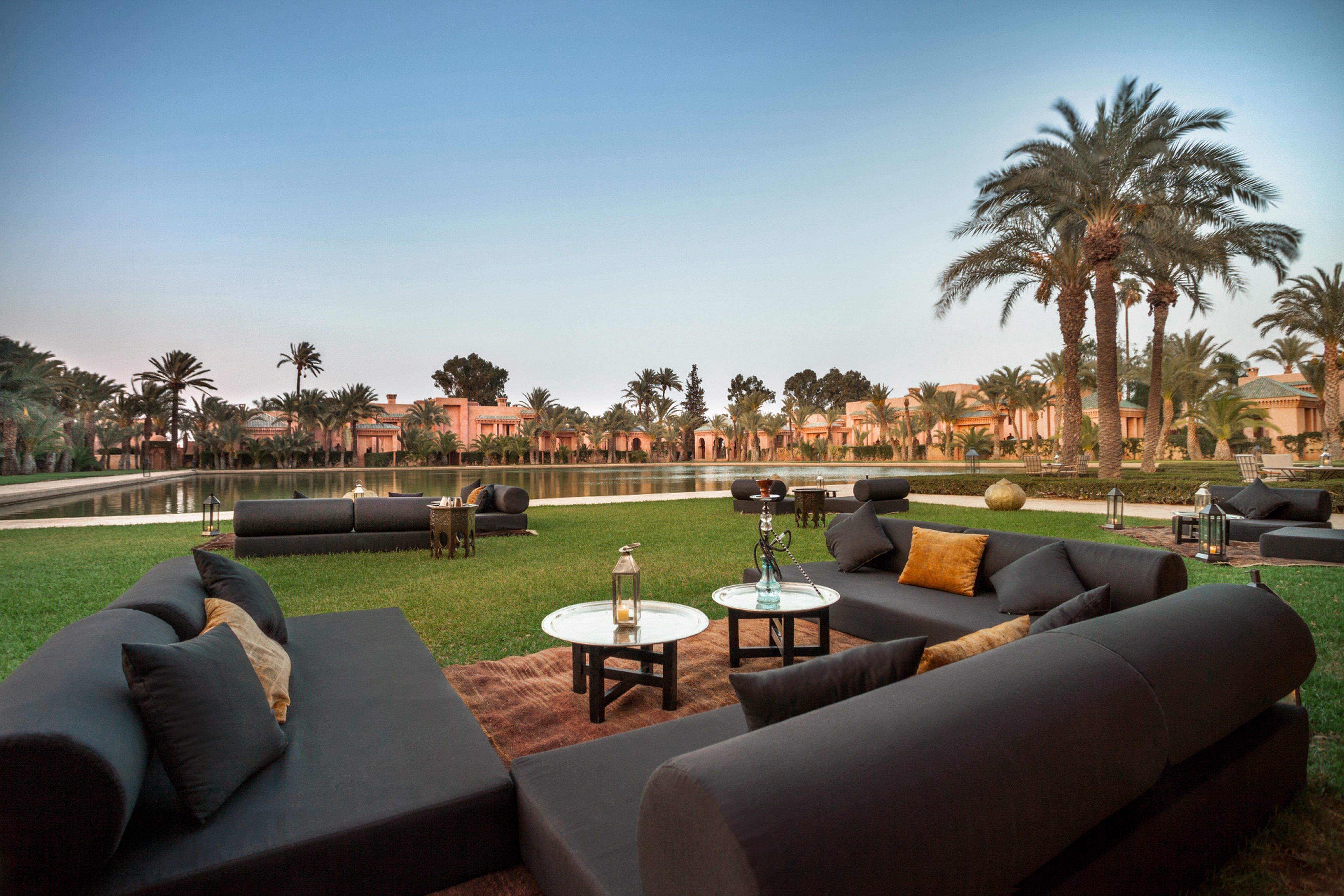
The palm grove on the edge of Marrakech holds some of the city's most secluded luxury properties, set among palms and rose gardens at a remove from the medina's intensity.
Morocco boutique riad hotel
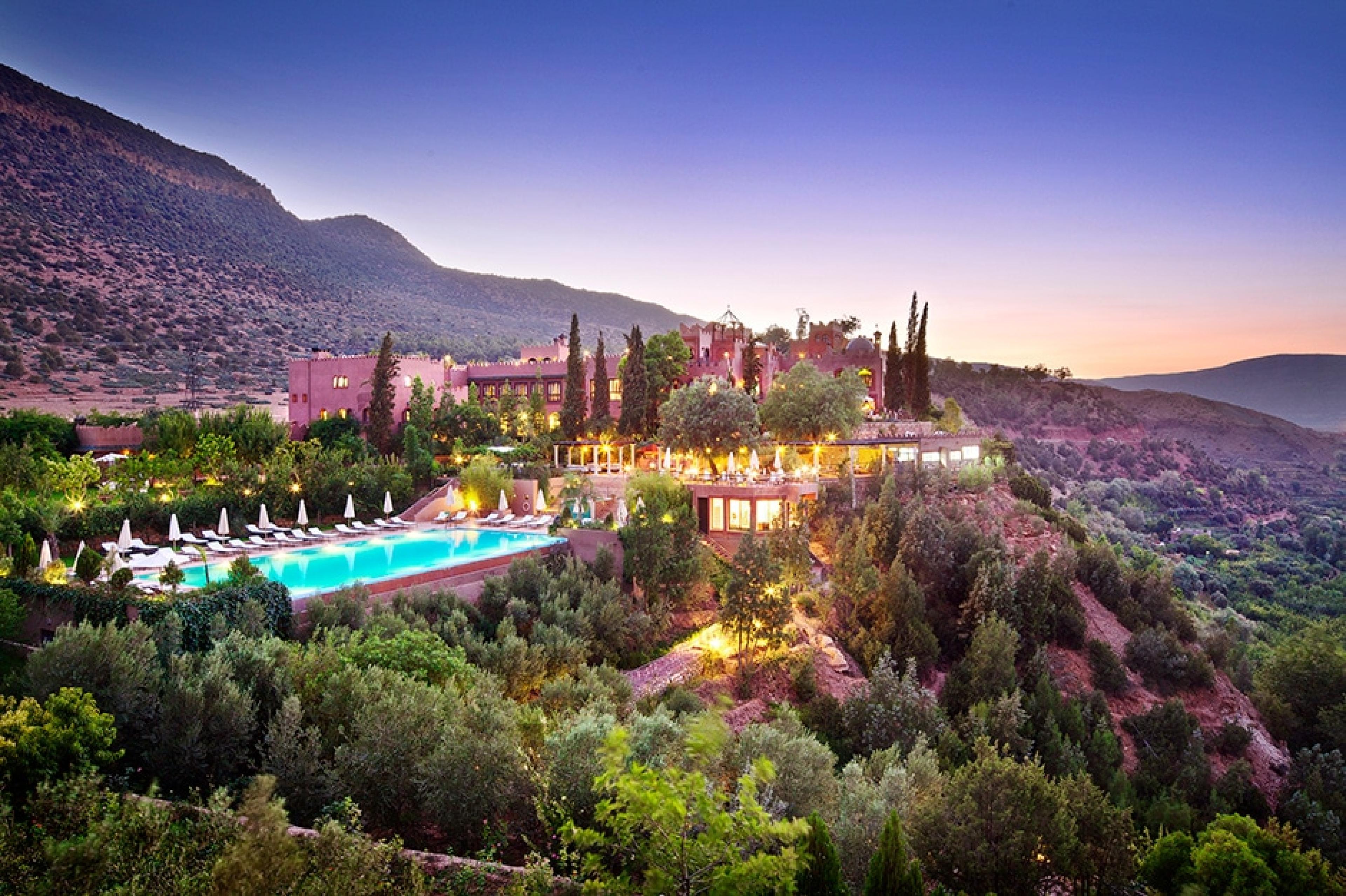
Riad Stays
The riad is Morocco's defining accommodation form — a courtyard house that turns inward, tiled and planted, where the street noise disappears the moment you step inside.
Hassan II Mosque Casablanca
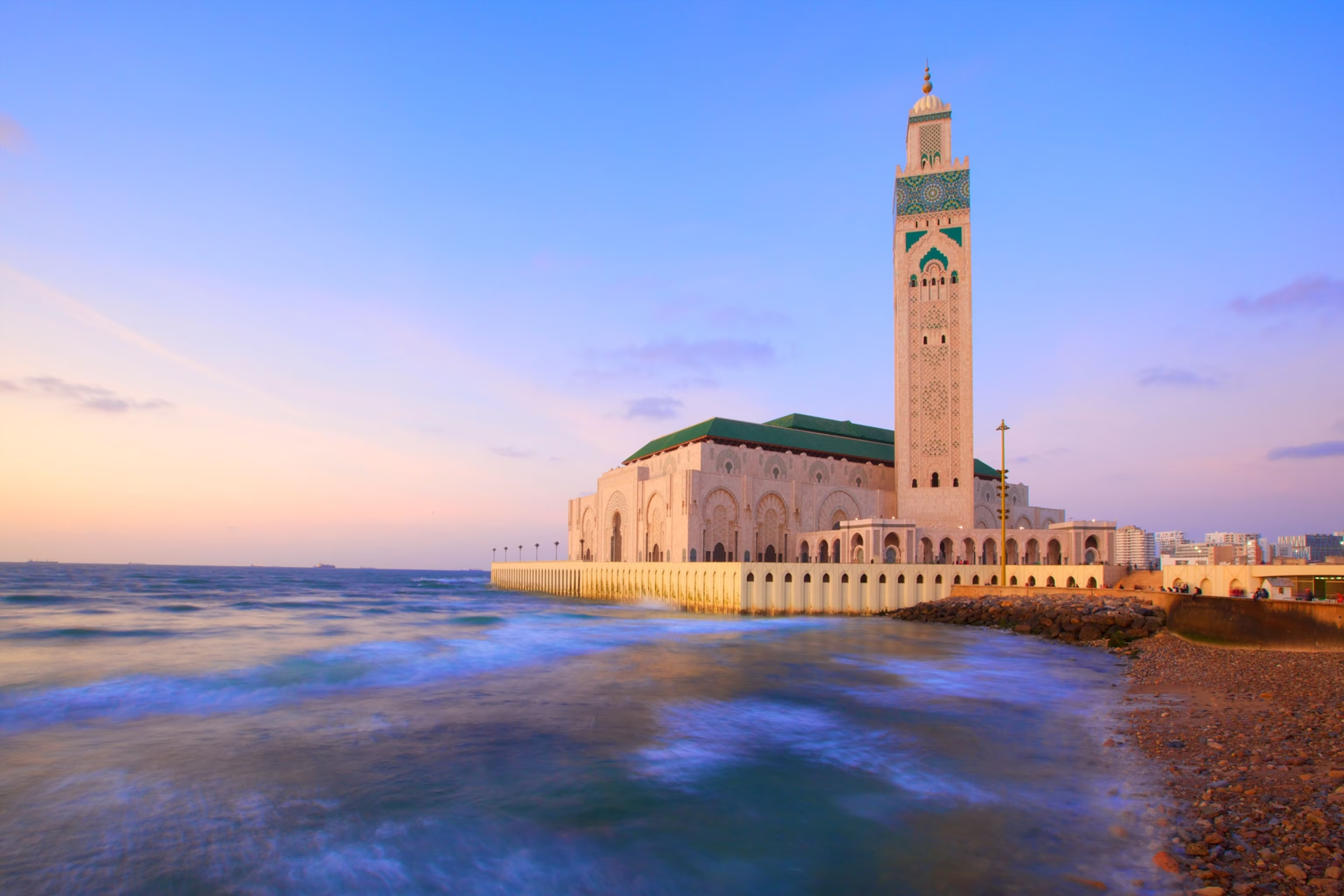
Casablanca
The Hassan II Mosque — built over the Atlantic, with a retractable roof and a minaret visible from 30 miles at sea — is one of the most significant pieces of architecture in the Islamic world.
Ait Benhaddou Morocco
Aït Benhaddou
The UNESCO-listed ksar rising from the pre-Saharan plain south of the High Atlas has appeared in more films than most purpose-built sets and is more extraordinary in person than in any of them.
Morocco landscape
The High Atlas
The mountain range separating Marrakech from the Sahara holds Berber villages, mountain passes, and the route south through the Draa Valley toward the dunes.
Moroccan restaurant dining
Moroccan Dining
Tagine, pastilla, and mechoui served in tiled courtyards under lantern light — Moroccan food is as much about the setting as the cooking, and the setting is rarely ordinary.
Morocco desert
The Sahara
The dunes at Merzouga and Zagora are where Morocco opens into silence. Camel treks, desert camp nights, and dawn over the dunes are experiences with no equivalent elsewhere.
Morocco culture
Fès
The world's largest car-free urban area and one of its oldest — the medina of Fès el-Bali has operated continuously for over a thousand years and remains a living city rather than a preserved one.